Showing posts with label #COYS. Show all posts

Sunday, 10 January 2016

A German WWI Submarine Washed Upon the Shore of an English Seaside Town 1919.


The Great War was over and hostilities had ceased. By the time of early spring in 1919 people of Britain were beginning to get back to normality after the Great War had changed so many lives. It was a war that many Britons had felt close too, even at home upon their island. Most wars before then had been fought across the sea in far off distant lands. Even wars in Europe had not troubled the civilian population the way the Great War had. But by 1919 it was over.

The people of the seaside town of Hastings had not known of an enemy invader since William the Conqueror in 1066.

On April the 15th 1919 the seaside town's inhabitants woke to a shock. Washed upon the shore was a monumental edifice of Kaiser Wilhelm II enemy navy. A dreaded submarine (SM U-118) The colossal structure looked like a beached whale.

In no time the inhabitants of Hastings were all upon the beach looking at the stricken fighting marine machine in their thousands. A huge lifeless vessel laying upon the shingle while the people walked about it like little ants in awe of the dead thing before them.

The British Admiralty gave the town clerk consent to charge a boarding fee to people who wanted to get up onto the submarine's deck. Also two members of the coastguard were drafted in to show visitors around the inside of the German submarine. This was quickly abandoned because the two coastguards who remained inside the sub, waiting for the visitors, became seriously ill. Shortly afterwards the two coast guards died. It was later realised that the batteries of the German submarine had been leaking deadly chlorine gas. This had caused the men's brains and lungs to burn, leaving acute and fatal abscesses.

The submarine had been surrendered to French forces after the armistice in November 1918. SM U -118 was being towed from France to Scapa Flow where it was to be broken up for scrape. It had been launched in May 1918. The vessel was virtually new. As it was being towed through the English channel, its hawser broke during a storm. It was cast adrift and ran aground on the beach at Hastings. 

There were a few attempts to drag the submarine back into the water and a French navel vessel tried to brake it up with explosives. None of this worked and the close proximity of civilian establishments forced the powers that be to brake the vessel up upon the shore between October and December 1919. All the salvage was sold for scrap.


Why do we want to do daring things?


What is it about absurdly daring things that transfix us? Walking a tightrope with a drop that would kill. There is nothing that can be gained from it. It does not further the human cause. It is something negative. Yet still I feel compelled to watch such people tweak the nose of danger. Sometimes danger bites back.

I think the observer gambles that the walker will not fall, but we watch in case he does. When this happens we recoil and think, 'Good God!' or other such things.

What of the daredevil who is compelled to try such things? What goes on in their mind? I can't stand heights and this is what I think draws me to watch. There is absolutely no way upon Earth, I would ever want to do such a thing, yet I'm drawn to watch someone try.

I remember watching Evel Knievel as a kid jumping the buses on a motorbike. I thought it was great, but I've never entertained the idea of trying it myself. Why do I watch such things. The Isle of Man TT motorbike racing is something else too. All these life threatening things and I get an adrenalin rush watching it. Why?

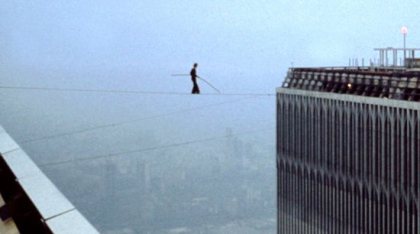
The other day I bought a DVD about a Frenchman who tightrope walked the Twin Towers back in the 70s. He sneaked in the equipment and secretly rigged the wire between both towers and then began his walk while police got to the top on both building waiting to arrest him. I found the documentary movie gripping and I still keep asking myself why? There is no way I would do it. I thought the walker was a total fruit loop, yet I was compelled to watch.

Saturday, 26 September 2015

Did I see a Male Montagu's Harrier or Hen Harrier?


My wife and I went to the bird hides in the Fenland of Manea, just across from Ely cathedral. We often go here and I have done a number of blogs concerning looking for birds of prey at these hides. It was a very fine late September day with clear blue skies. Therefore Carole and I decide to take a quick drive into the Fenland village and out towards the bird hides once again.

Upon a gate post along the dyke, Carole caught sight of a bird of prey perched and surveying its surroundings. At first we thought it was a common buzzard. It was not a marsh harrier, which always seem to be about this part of the fen. As I looked more closely I could not make out if it was a Hen Harrier or even a Montagu’s Harrier.

We were in a marshy or watery habitat and Hen Harriers prefer treeless moorland. The fen does not have many trees but it’s not moorland. Therefore, I wondered if it was the rarer Montagu’s Harrier. They are very similar to a Hen Harrier and are only summer visitors. They migrate in late September or early October. They are scarce and only breed in small sites in Eastern England, which is where the Fenland is. This bird had all the grey trimmings of a male Montagu’s Harrier, but it could have been a Hen Harrier instead. It was at a fare distance and I took many shots.

The harrier kept flying from the gate post onto the soil and then back. At one time another hawk landed on a post further up by another bird hide and I got a few shots of both.

In the end, I decided to try and move closer for better shot. I managed a few yards along the bridal path once coming down the bird hide’s steps. Then the hawk got spooked and took off. As it went into the clear blue sky I managed to get a few more shots.


If anyone with such knowledge could confirm what type of harrier it is, I would be grateful. I’m thinking it might be a Montagu’s Harrier but I can’t be sure.


 .


Sunday, 13 September 2015

Marsh Harriers and Kestrels at the Bird Hides


Carole and I went, once again, to the bird hides at Manea in Cambridgeshire. They have views across the marshy fenland towards Ely Cathedral. Here all sorts of birds like to come and go. There are great migrations of birds all year round.

To be honest, I’m not too interested in these flocks that come and go because I like to spot the variety of birds of prey that seem to be increasing in numbers around the fenland. I think there have been some EU directives concerning banning certain pesticides. This has led to an increase in birds of prey as it was suspected that rodents, on which birds of prey feed; were becoming poisoned and then eaten by hawks, owls, falcons and buzzards etc. Thus the poison was passed on and this led to a bird of prey numbers diminishing.

This is one among other positive steps towards looking out for the birds of prey. Obviously, such legislation is paying dividends. I can’t believe I’m saying something optimistic about the EU. Well, there you go on that particular issue. Who knows, I might spot some flying pigs one day.

I used the telephoto 420mm to800mm zoom lens that I purchased and also the spotting scope and tripod. Armed with good binoculars, a picnic box and two coffee flasks; Carole and I set off with great aplomb to the bird hides. The zoom lens has to be worked manually. One can’t focus and get an automatic adjustment with this compatible adaptation. It was a cheap and cheerful zoom lens and is fine for a beginner like me, but new draw backs are coming into play. The lens is good for distance, but one does need a tripod because there is a small jogging upon taking the photo shots. Also, while on manual, one needs to go into the SO settings and adjust shutter speed and light too. Otherwise, the photo shot will be too dark. This was a trial and error learning curve with me.

Today, I got some fine shots of marsh harriers and kestrels, but a new problem has come about that I did not anticipate. Using manual on my extended scope does require a lot of skill to get a moving target in focus, (flying hawk) and when the topic is in focus it can quickly move out and blur. It might move further away and distort or come closer and obscure. One must constantly adjust while following the bird in flight. Also one must keep the camera firmly upon the tripod or the shot will, again, blur when trying to capture the hawk in flight. There are a lot of things to think of and all this can be rather testing when trying to capture a moment. I had a marsh harrier come across the fen and it flew straight towards our bird hide. I was taking multiple shots while grappling with focus and tripod. The marsh harrier came so close that I did not need the 420mm to 800mm lens strength. I could have kept on the max 200mm lens with all it auto focus and would have had some great shots. I did not have time to change the lens in such a short time so I improvised and found some of the shots were blurred while some were fine. As the hawk circled it went out of focus and then as it returned and flew along the river it came back into focus. It was all rather fun as Carole and I gasped at the fine bird of prey – a female marsh harrier.

So now I’m planning on buying a totally compatible zoom lens for my make of camera and not the cheap adaptation that is limited where automatic focusing is concerned. I’m not knocking the cheap zoom lens because it has taught me much and I have still had much gratification from using it. I just think I’m ready to move on where the more expensive and better quality zoom lens equipment is concerned.

Our new spotting scope was put to good use too. We were in the hides for four hours and spent a very pleasant morning (bird of prey) bird watching. The marsh harriers were out in plentiful numbers but were mostly too far even for the full 800mm. However, we were able to observe well with telescope and binoculars. The crows are often a good source to alert us too hawks or buzzards because crows will harass birds of prey by gathering about them in flight. They certainly don’t like marsh harriers flying into their air space and will congregate around most hawks to try and intimidate them. Below are some of the shots that did not come out too bad. Well, not good, but one can see they are marsh harrier and kestrel.


kestrel


Kestrel in flight


kestrel flying off


A marsh harrier comes towards us across the fen


...as it nears it turns off along the river...


...then it turns back...


...it looks as though it might land...


...then it leaves...

... a murder of crows try to intimidate her as she leaves.


Saturday, 15 August 2015

What we Dared to do (at the Raptor Centre.)

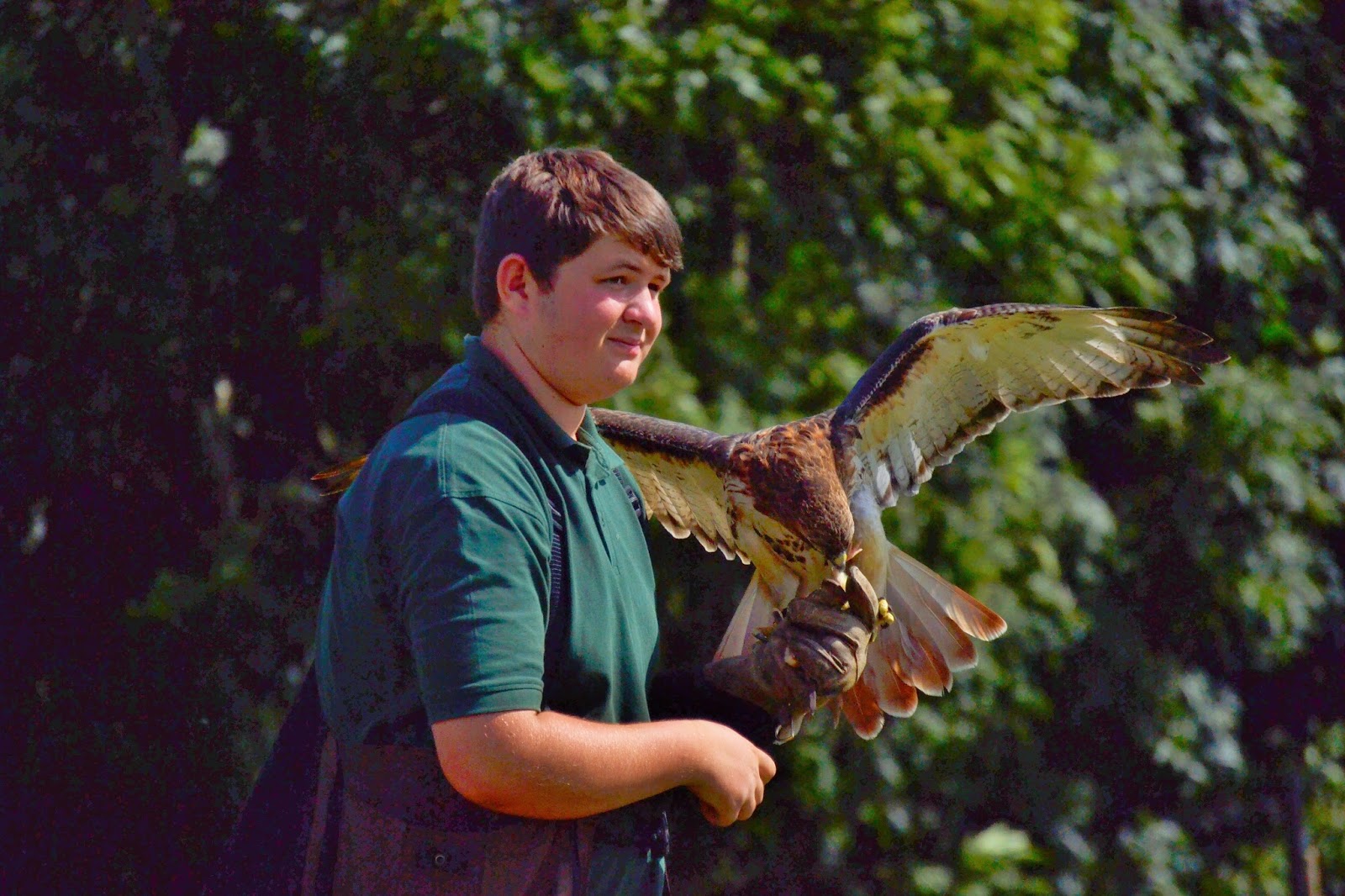
At the raptor centre, I watched the falconry display. I was in awe of the shocking, wicked and vicious magnificence of the fine bird of prey. It is an apathetic cruel creature that oozes a wicked beauty of nature's adaptations. It has no appreciation for the fine being it is and does not understand people's wonder for its untamed beauty. It just sees food. Its loyalty in coming back is food and it will eat until it is fed up.

Fed up is used by people to describe boredom. It comes from falconers in Medieval times. When the bird was gorged, it was well and truly fed up and would respond to no more commands and become disinterested in eating rewards.