Showing posts with label Royal Navy. Show all posts

Sunday, 8 September 2019

Has Anyone read the Aubrey-Maturin series by Patrick O' Brian?


I have resumed reading the Patrick O'Brian Naval stories of the Aubrey-Maturin series. I am on novel 15 at the moment. It is called Clarissa Oakes in the UK. It is known as The Truelove in the USA. Many of the stories are set during the Napoleonic war, but a huge section of the this Aubrey-Maturin series takes place during the US/British and Canadian War of 1812 to 1814.
The stories unfold as a continuing saga. A little like Poldark at sea, The dialogue, of which there is a superb and rich amount, makes the reader feel they are there in the time of early 19th-century sail. The descriptions of ship, sea and tide are very compelling. The two main characters of Jack Aubrey and Stephen Maturin show us everything we need to know as these dynamic stories sail on.
At sea, Jack Aubrey is a man of great substance. He has a knack of telling how a ship is upon sight. He can tell if the crew are seasoned by the way the enemy or a friend goes about the rigging. He can note an experienced group of seamen who have not worked together before. He notices every little blemish of vessel or crew. He is a Royal Navy officer who knows his trade.
Stephen Maturin is Aubrey's physician and is also a British government secret agent. He knows nothing of seamanship but is excellent friends with Jack Aubrey because of their shared interests in music. As a physician, he also makes for a competent ship's surgeon.
By contrast, Aubrey is a complete duck out of the water upon land. A bit of an idiot who seems to get himself into all sorts of financial problems when back home. Here, his trusted friend Stephen Maturin often comes to the rescue.
These Aubrey-Maturin naval tales are a complete delight. I think there are about twenty stories in the saga. Therefore, after this serious is finished, I'm thinking of the Alexander Kent, Richard Bolitho stories. What does anyone else think? I would like to hear from any person who enjoys a good naval yarn. 

Tuesday, 2 October 2018

Winged Escort by Douglas Reeman (My Goodreads Review)

Winged Escort

My rating: 5 of 5 stars

A BIG WOW! For this Douglas Reeman story. I always enjoy most of his War stories, but this one was exceptional. I think it is because I always feel compelled by aircraft carriers and have a particular interest in HMS Ark Royal and her Fairy Swordfish (Stringbags) during World War II. Therefore, I was seduced by the front cover. I know this is wrong but the story is even more exciting than the lavish and dramatic front cover.

In this tale, we go aboard an American made aircraft carrier, called HMS Growler, as she prepares for her mission to protect a convoy on route to Murmansk in the Soviet Union. We are introduced to various characters. The main man for the reader is twenty-six years old RNR pilot Tim Rowan.

HMS Growler uses the famed Fairy Swordfish and Seafires. Seafires are Fleet air arm marine version spitfires. The action throughout the story is splendid and very gripping indeed. There are submarine attacks, attacks in the Norwegian Fjords, head to head, cruiser and destroyer action. And this is just in the first half of the story on the Barent sea run. We then go to the Pacific where HMS Growler is with another battle group facing Japanese Kamikaze attacks.

If you love seafaring stories, this one is an absolute must. One of the most dynamic war stories I've ever read. Heroes, Villains, wet behind the ears boys coming of age and some not getting the chance. Plus a backdrop of winning the lady of his dreams. GREAT STUFF!


View all my reviews

The Thirteen-Gun Salute by Patrick O'Brian (My Goodreads Review)

The Thirteen-Gun Salute (Aubrey/Maturin, #13)

My rating: 4 of 5 stars

Another splendid continuation of the Jack Aubrey and Steve Maturin adventure. It is 1813 or 1814. The War with France and the USA is still happening. Aubrey and Maturin are on a new ship and must meet with the HMS Surprise after the fulfilment of a diplomatic mission in the South China Sea on Java - a Dutch-influenced area of the world. A man named Fox is in charge of the negotiation. On the competing French side are two British traitors, one of whom, is the arch-cad and card cheat from Treason's Harbour story and others. Edward Ledward, once of the Treasury and Andrew Wray, (The arch-cad)

Some diabolical climax concerning the devious dealings of these traitors comes to an almighty and surprising climax. We are left on the edge of a new adventure and wanting more.


View all my reviews

Wednesday, 26 September 2018

The Letter of Marque by Patrick O'Brian (My Goodreads Review)

The Letter of Marque  (Aubrey & Maturin, #12)

My rating: 5 of 5 stars

I'm profoundly in love with Diane Villiers. Steve Maturin's estranged wife. Both these characters turn over another leaf in this glorious tale of the continuing Aubrey/Maturin saga. Captain Jack Aubrey has been struck off the naval list because of enemy agents framing him for a stock exchange crime he did not commit. Many know he has been framed and the enemy agents guilty of the entrapment have fled the country. Aubrey is presented with HMS Surprise, which Steven Maturin has bought out of his inheritance. Therefore, Jack Aubrey is sailing the ship as a Letter of Marque - a privateer. He is still fighting for his country and trying to clear his name and win reinstatement back into the Royal Navy.

Once again I was enthralled by this twelfth story of the Royal Navy saga set in the time of Napoleon and the British/American War of 1812 to 1814. I can't wait to start on the next one. Splendid stuff.


The Far Side of the World by Patrick O'Brian (My Goodreads Review)

The Far Side of the World (Aubrey/Maturin #10)

My rating: 4 of 5 stars

Another great story in the Aubrey/Maturin saga. This time HMS Surprise is chasing an American commerce raider called USS Norfolk. It is 1813 and Britain is at war with the fledgeling nation USA. The crew of the Suprise endure all sorts of onboard dilemmas as the go around the Cape Horn and into the Pacific where they know the Norfolk is after the lucrative British Whaling ships. 

The movie starring Russel Crow was loosely based on this plot for the beginning, though it was very different in many ways. Please do not get me wrong. The movie was splendid and I really enjoyed it immensely. But in reality, it is a very different story because the enemy is a Frenchman and the year is 1804 in the movie. Also, many of the characters are different and the ending is dramatically different. I think the movie took snippets from many books and put together a rather fabulous film.

Anyways, back to the actual novel of the name. It is also splendid and a dynamic read. Another piece in the saga's jigsaw of events surrounding Captain Jack Aubrey and Steven Maturin's marvellous adventures. 


Saturday, 8 September 2018

The Ionian Mission by Patrick O'Brian (My Goodreads Review)

The Ionian Mission (Aubrey/Maturin Series, Book 8) (Aubrey & Maturin series)

My rating: 5 of 5 stars

Splendid Historical Read.

This was book eight in the Aubrey/Maturin saga. It was most enjoyable throughout. A bloody and gripping sea action too. All set in 1812. Much of the first half of the story is on blockade duty aboard HMS Worcester, but then the HMS Surprise comes back into the story. This is much to the delight of Jack Aubrey and the reader. We then go on an adventure to the Greek Islands and Adriatic where Greek and Turkish pirates are the danger. Aubrey is on a diplomatic mission of sorts, but when the action comes, it is fast and furious.

Steven Maturin is married to Diane Villiers and is establishing his grounds with his wife before we set off for the Mediterranean Sea. This saga is wonderful andI've been reading it in the proper order. There always seems to be something else for the reader to get into. If you enjoy seafaring sagas, then I could not recommend anything more highly than the Aubrey/Maturin series. They are truly tales to behold.


Saturday, 1 September 2018

The Greatest Enemy by Douglas Reeman (My Goodreads Review)

The Greatest Enemy

My rating: 5 of 5 stars

This was a fabulous and very gritty Royal Navy story. Most of Douglas Reeman’s stories are usually set in World War I or II. Especially II. This story is set in 1970. It concerns an old frigate named HMS Terrapin. The Terrapin is at the end of her service days. She is ready for the scrap yard or for sale to a developing nation. The ship is at Singapore when a new Captain is suddenly given charge of the languishing ship and over-relaxed crew. The Far East is a place that the United Kingdom is gradually withdrawing from. The Empire has gone and the Royal Navy is shrinking in size.

The new Captain is completely old school. Not suited for the modern day Navy. He is bubbling with aggressive patriotism and alive with no-nonsense enthusiasm. Lieutenant-Commander Standish is alarmed by the new Captain’s mad vigour. Yet through all of the bluster and tragic past of this no-nonsense man, there is a spark. The enthusiasm grips Standish and a loyalty begins to develop. The area of the sea they patrol is infested with pirate junks and smugglers. The Vietnam War is still going on and there are junks from the Mekong Delta.

HMS Terrapin is part of a wider naval mission or project with an American Admiral in overall command of the patrols up against the smuggling etc. There is also another British Captain attached to the American Admiral’s staff. A liaison officer. He is trying to ruin Terrapin’s new Commander.

The story becomes more gripping as the gun hoe Captain of the Terrapin gets it into his head that there is a bigger menace to deal with among the seafaring pirates and smugglers. Something connected with the Communist powers. The strange thing is… Lieutenant-Commander Standish thinks he might have a point.

I wished the British film industry would go back to making those old matinée pictures. This one would be an absolute sizzler. I could not put it down. I enjoyed every single page of this seafaring tale.


Tuesday, 28 August 2018

The Surgeon's Mate by Patrick O'Brian (My Goodreads Review)

The Surgeon's Mate (Aubrey/Maturin, #7)

My rating: 4 of 5 stars

The Surgeon’s Mate is the 7th Aubrey/Maturin Royal Navy story set during the time of the Napoleonic Wars. It is 1812 and there is a new war with the USA. Aubrey and Maturin have escaped on board the HMS Shannon and been present during the battle with USS Chesapeake. From Canada, Aubrey and Maturin make their way back to Britain where more dilemmas await each man’s careful consideration. As a Captain at sea, Jack Aubrey is tremendous. On land, he seems to become a bit of a buffoon. Quite by accident. These land capers get him into all sorts of trouble and often his devoted wife Sophie and his good friend Maturin are the ones who seem to get him out of such vexations. Usually, a ship’s command turns up on time and he can get away from it all with a high sea adventure.

This story moves along the same lines as Aubrey and Maturin go on a mission in the Baltic. In this sea is a fortified island manned by Catalans. Maturin is half Catalan and half Irish. To persuade the garrison to surrender and ally with Britain against Napoleon is the aim of the British government. Maturin is selected to do this and he wishes Aubrey to command the sloop, HMS Ariel, upon the mission. Once again, Maturin is up to his neck at sea where Aubrey can always pull something out of the bag for him. Also, the elegant and tantalising Diane Villiers is still in the story. She becomes more dashing with her gloriously refined roguish elegance and sincere support for her country. The whole saga takes another fabulous step forward. A peach of a read. I can’t wait for the next story in this wonderful chronicle of seafarers.


View all my reviews

Monday, 16 July 2018

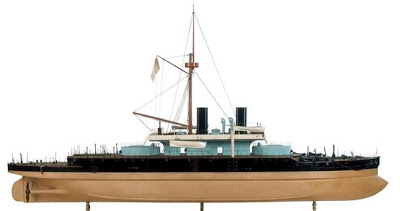
Victorian Battleship HMS Devastation - The Pattern for the British Empire's Future Battleships.

HMS Devastation.

The Pattern for Future Battleships.

HMS Devastation.


The Dawn of Battleships Without Sails.

Ships made of iron came about during the mid-nineteenth century. There were many prototypes in various countries. France built some wonderful ironclad ships and Great Britain got into an arms race with them. It was a natural competitive way of the age. France and Britain had been natural enemies, but they had been fighting side by side as allies during the Crimean War.
The American Civil War saw some very innovative designs too. People were inventing all sorts of ways to destroy other ships. Anything that might give them an advantage in marine warfare. The Confederate forces even managed to build a submarine. They mounted the first ever successful submarine attack upon a battleship. The cost was high because the submarine was sunk too.
Great Britain wanted to build a ship made of iron and without sails. They hoped for a steam driven ship. Engines fuelled by coal which in turn, rotated a prop shaft attached to a propeller at the stern of the ship and below the water. This gave them propulsion without the aid of sails. On the 12th of July 1871 at Portsmouth, the Royal Navy launched HMS Thunder Child. This battleship was state of the art during this time. There were no sails rigging and the ship’s guns were inside revolving turrets encased in iron walls. The whole ship was constructed entirely of iron. It was the first of two Devastation class battleships. The other would be named, HMS Thunderer.

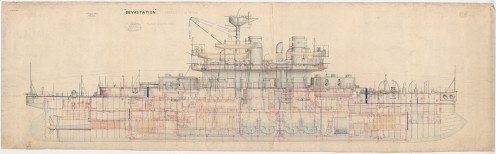
Plans for HMS Devastation.


A New Innovation.

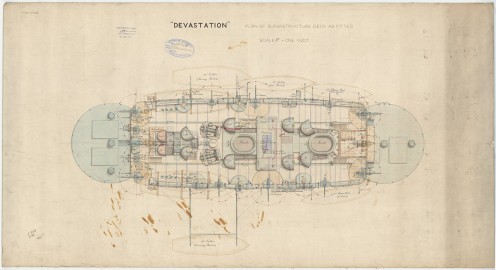
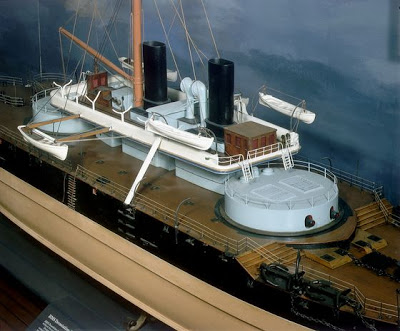
The ship sat very low in the water. The stern and the bow were a mere eight foot above the sea line. The central freeboard area of the vessel was raised higher. To move from the stern or bow to the freeboard, a crew member would have to walk up port or starboard stairs. The fore and aft of the upper freeboard area contained the revolving turret guns. Between was the small superstructure. There was an internal ladder leading up to the open superstructure deck. Also at the back of the revolving turret guns’ metal wall was an attached ladder. A crewman could get on top of the turret, where a stair gantry leads down from the fore and aft of the superstructure. It was raised above the actual turret – the last step suspended in mid-air. This allowed the turret gun to rotate and the stair gantry ending a step above could not interfere with the rotation of the turret. All delightful little innovations of the time.
The ironclad ship must have appeared very odd to the Victorian public of Britain. Especially the fact that the entire ship was made of steel. They would have been awe-struck that such a vessel could float. The complete lack of sails and rigging would seem extremely unusual. There was also a pointed ram at the bow. This sat below the water as the ship ploughed through the sea. Even in a moderate swell, the sea would have cascaded over the bow and capstan area of the deck.
The first guns to be placed inside the turrets were muzzleloaders. This means the shell and charge were rammed into the gun via the front of the barrel. Similar to the old ways of cannon loading. The charge first and then a shell. All rammed down before ignition. The breech-loading guns with shell canisters would not be adopted for a number of years by the Royal Navy. This seemed a little lacking for the time. Even though it was 1871. Each turret contained two guns. They were on wheels and there was a type of small rail that the wheels sat upon. As the two mounted guns were wheeled back inside the enclosure of the turret, they could be tipped forward so the front open barrel pointed down to the floor. There was a hole in the deck leading to a lower storey. At this lower level was a gutter like ramming system. Here loaders, below deck, could put a charge and push it up the grooves and into the dipped barrel through the ceiling. Then the shell was added to sit upon the charge. When this operation was completed, the guns were pulled back upright in the turret above. When the guns were level placed, they were rolled forward upon the rails. The front barrels barely protruded from the gun ports as one can observe in early photos.

Bird's Eye View of Devastation's Superstructure and Revolving Turrets.


Costly Design Flaws.

Of course, this only lasted for a short time because breech loaders were brought in by the Royal Navy to replace the old muzzle-loading guns. This change came about because of an accident during a gunnery exercise on board Devastation’s sister ship, HMS Thunderer. This occurred in January 1879. As the guns on the forward turret were fired, the gun crew held their hands over their ears. According to accident reports after the event, only one gun had fired. The gun crew pulled the muzzleloaders back upon the rail and tipped them forward for a second reloading. The gun that never went off was reloaded with another charge and another shell. Therefore, one of the guns had a charge and shell, plus another charge and shell all sitting in the same barrel. When the guns were rolled forward for another firing, the results were horrendous. The gunnery crew never stood a chance in the confines of the revolving turret. The catastrophic mistake caused the deaths of 11 crew members. A further 35 were injured as the explosion ripped through and out of the forward turret.
When the accident investigation was concluded this reason was given for the calamity. However, there were some investigators that believed there were faults with the hydraulic power-ramming system. There persists another theory that a part of the hydraulics broke off and blocked the barrels during the loading process. Whatever the actual reason was, the Royal Navy decided to invest in Breech loaders. This meant all gun loading could be done inside the turrets.

The Fore Turret and Superstructure of HMS Devastation.


Never a Shot in Anger.

HMS Devastation would never fire her guns in anger. Despite being in service for 32 years. She saw duty in the Mediterranean for much of her naval use and in home waters too. She was taken out of her role in 1905 and sold for scrap in 1908. During her time, she underwent various modernizations. Some of these improvements were for her boilers and guns. Her various crew was believed to have been fond of the ship, but the design did have critics too.
The press seemed to loathe the Devastation class ships. They wrote criticising reports of both vessels. These articles led to the Naval Constructor, Sir Edward Reed losing his maritime position. They ship’s had come into being under a cloak of controversy when they were launched. I think the ships were not the problem, but Sir Edward Reed was. He had been accused of taking ideas, about the revolving turret, from another designer. He had been accused of decrying the former designer before adopting the late man’s gun turrets for Devastation. This had caused some controversy with the late designer’s widow. I think this made Reed unpopular in parts of the Admiralty and this was filtered through to the British press.
Many new ships evolved from this Devastation design. It was a prelude to the Dreadnoughts. The original Devastation class ships were medium size battleships that could attack and destroy an opponent with speed. They were heavily armed and manoeuvrable. How formidable they may have been can only be speculated about. The Royal Navy was extremely intimidating in this day and age. There was not a force to be reckoned with it. After the Napoleonic wars ending in 1815, the last threatening confrontation would not come until 1914. This is a period of almost 100 years.
I can’t help wondering about HMS Devastation. I like the look of the ship because she has that primitive aspect of a metal battleship. Yet parts of the design are stuck in the old galleon times. Especially with the little stumpy muzzleloading guns scarcely protruding through the gun ports of innovative revolving turrets. I suspect she may have had a lot of vulnerabilities in battle. Yet I’m thinking of her up against a dreadnought. A further adaptation.
What would she have been like against a sailing galleon battleship like HMS Warrior? I’ve been aboard the Warrior. She is now an exhibition ship. Part of the Naval Museum at Portsmouth. I think the old HMS Victory of Nelson’s day would be outmanoeuvred and easily destroyed by Devastation. But I suspect the Warrior may have been able to put up a good account because she is also an ironclad. She has a line of port and starboard guns. Her armament is bigger. Yet she has sail and rigging. Perhaps these parts of the old ship would be susceptible to Devastation. Then I think of the number of guns Warrior has. Surely some of these would find the mark? Even on a fast moving vessel like Devastation. If there are any ship enthusiasts, please comment on how you think such a duel would make out. I would be interested to know.

Short Clip About HMS Thunderer of the Devastation Class.

Wednesday, 2 May 2018

Master and Commander by Patrick O'Brian (My Goodreads Review)

Master and Commander

My rating: 4 of 5 stars

I almost skipped this first story and would have started on Post Captain, which is the second of these acclaimed stories of the Royal Navy during the time of Nelson etc. However, I was informed that the movie of the same name is nothing like the first Patrick O'Brien novel of the same name. All the characters are there, but I think the movie is more like another Aubrey–Maturin story called the Far Side of the World. The movie was most enjoyable, so I'm not trying to knock it. I just thought I might already know the story.

Alas, I did not. The whole Aubrey–Maturin saga starts off splendidly in the Mediterranean. Our two heroes are on the island of Majorca. This is where they first meet at a concert hosted by musicians and wives of the British gentry. I was absolutely enthralled by the dialogue of these many seamen and the author presents the times wonderfully well. The characters are splendid and the action sequences are gripping. I would highly recommend this novel. Especially if you enjoy historical fiction of a nautical flavour. I will eventually read other stories of the Aubrey–Maturin series. I am now a fan.


Friday, 4 August 2017

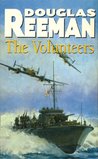
The Volunteers by Douglas Reeman (My Goodreads Review)

The Volunteers

My rating: 4 of 5 stars

In my mind’s eye, I could see this as something like a black and white matinee flick that one might have seen in the fifties. The story takes place from 1943 to 1944 with an epilogue etc in 1945.

Three men decided to put in for a marine service special ops group. They are on MTB and MGB boats doing missions or raids upon enemy occupied territory at various locations. One is a Canadian from the Atlantic convoys who is called Frazer, another is an English bomb disposal man (Allenby) and the final is an east end policeman. (Ives) They are recruited to replace others that have been killed in action.

As the saga develops we are introduced to some excellent characters and two wrens that are love interests to Frazer and Allenby. There are some great action scenes throughout the story as the fast patrol boats confront the enemy. The way the book is written gives a feeling of actually being there in those times of WWII when the people were said to be at their finest.

Great action and lots of wonderful characters – a read that I would recommend to anyone who enjoys Naval stories and WWII based thriller.


View all my reviews

Friday, 28 July 2017

The Age of Invincible: The Ship That Defined the Modern Royal Navy (My Goodreads Review)

The Age of Invincible: The Ship That Defined the Modern Royal NavyThe Age of Invincible: The Ship That Defined the Modern Royal Navy by Nick Childs
My rating: 5 of 5 stars

This book about the development of the reduced Royal Navy is very gripping reading. To be honest, I thought the book was going to be about the aircraft carrier HMS Invincible – the ship that became iconized in the Falkland’s War and mainly, just that topic only. Maybe some details of the building and design etc. What I did not expect was the in depth account of how the Royal Navy began to diminish with the break-up of the old empire after World War II.

At first, I thought I would not be too interested in the politics of all this, but as I continued to read the book, I was engrossed by the way the Royal Navy had to fight in the government’s corridors of power to define its new standing in the world.

There were projects for new aircraft carriers throughout the 1950s and 1960s but each time defence ministers seemed to think that aircraft carriers were too vulnerable and expensive. In the end, the Royal Navy actually put forward plans for a Cruiser with a flight deck. (A small aircraft carrier in all but name.)

By the time it was built it was referred to as an aircraft carrier and two more Invincible class carriers were to be built to allow the Royal Navy a compliment of three. Then under another new government things changed again as more cuts were to be made and one carrier to be sold to another country.

This to and through for ships comes to a head with Naval staff perusing a minister across the country to try and persuade the government to allow the Royal Navy its ships. All the way through the decades there is the need to adapt to new demands and the new world order. Much of the focus is on NATO and nuclear submarines.

Then comes the chance to convince the government that aircraft carriers are necessary. Argentina invades the Falklands. The whole thing was tailor made for the Royal Navy in a far off place.

I recommend this title for anyone who enjoys the Royal Navy and ships. Also for the politics of the situation over the decades leading up to the building of HMS Invisible.


The Last Days of Thunder Child


View all my reviews

Thursday, 3 July 2014

Britain Should not Fret - The Cost of Restoring Carriers to Royal Navy

Britain should not fret over this expenditure. This often happens and it can be to the nations cost when something comes about and the UK is unable to respond. This is a necessary cost in the long run. We need the aircraft carriers.


Britain Frets Over Cost of Restoring Carriers to Royal Navy - WSJ

Wednesday, 2 July 2014

Saturday, 8 May 2010

First Submarine Attack by Americans against British 1776


When it comes to being creative or getting an idea off the drawing board, and putting it to practical use; I think the Americans are a nation that can motivate and plug dreams to become reality. If they don’t succeed the first time, they try again – a trait that served them well over the years.

I was astonished to learn that they invented and used a submarine against us in 1776. One of their first attempts at chasing, what was then, a fantasy notion. I was taken aback when I watched the small YouTube documentary below, about an attempted innovation by the fledgeling nation, when they were at war with us Brits. It was during the Independence conflict and was the first recorded submarine attack ever. The target was H.M.S. Eagle - a Royal Navy vessel that was moored off of Liberty Island.

The Turtle was like a giant distorted beer barrel in a strawberry shape and was waterproof. It had room for one person who worked the submersible device from within.

The underwater weapon was cast from a nearby bank during the night. It bobbed about in the waves as it neared the anchored ship. Then when the Turtle got close it submerged successfully. The underwater contraption then proceeded towards H.M.S. Eagle's hull underwater and out of sight of the lookouts on board the ship.

The daring expedition was controlled by Sergeant Ezra Lee (1749 - 1821.) He managed to manoeuvre the quaint submarine under the hull of H.M.S. Eagle as she lay in anchor. Once underneath, he tried to bore a hole into the ship’s hull with the use of a drill. In this final part of his mission, he was unsuccessful because he could not settle the drill properly upon the wood. He had air enough for thirty minutes and as he began to tire, he had to abandon the mission. The Turtle backed away to safety.

The American Militia would try two further attempts, during the Independence war, but these were unsuccessful too. However, this primitive underwater vehicle, known as the Turtle, did come close to success. It was the first submarine in use during a military conflict.


Wednesday, 5 May 2010

Royal Navy Fairy Swordfish Plane (String Bag)


The Fairy Swordfish (nicknamed: the string bag) was an outdated biplane that performed amazingly well during the early stages of the World War II. She was used on board British aircraft carriers and to good effect. I think much of her success was because the plane could function in areas where she had no competition from much faster fighter aircraft. At sea, land-based fighter aircraft, that the enemy might try to send out, where out of range. She could attack enemy fleets at sea. Italy and Germany never used aircraft carriers. Germany had one but it was never modified to go into action.

On one occasion the British used the string bag to attack the Italian fleet when docked at Taranto. It was a night attack and it took the Italians by surprise. It caused tremendous damage to the Italian Navy and the string bag would be responsible for other major hits upon the Italian fleet at sea.

The string bags were also responsible for crippling the German Battleship Bismark by dropping torpedoes. One of these damaged and jammed the great ship's rudder. It allowed the Royal Navy to close in on the stricken ship from all directions and sink the German ship. This caused tremendous damage to Germany's surface fleet in WWII. It elevated the slumbering Swordfish to hero status among the Fleet Air Arm of the Royal Navy. So much damage by an almost obsolete biplane.

Perhaps the string bags became over confident with such an affectionate and overinflated reputation. It had performed and punched above its expected weight. After these early successes, the Fleet Air Arm of the \Royal Navy, became overbold because they attempted to use the string bag in an attack upon German ships in the Channel close to northern France. This operation went preposterously wrong. Close to land, the Germans sent up intercepting fighter planes and every string bag was lost as the mission failed in diabolical shambles. 

As the string bags attempted to abort and return to base they were so slow that the German fighters pursuing overshot the lumbering British planes before a concentrated fire could be focused on the fleeing Swordfish. The German fighters realised they had to lower their landing wheels to slow down enough as they fell behind the lumbering string bags. This allowed them to remain in range long enough to let off a substantial burst of machine gun fire. 

This incident brought home the reality of the Fairy Swordfish's limitations. She remained a much-loved plane because of early exploits in the war and her allure is affectionate because of some amazing feats performed by such a modest craft. There are still some left today, and I have seen them at air shows. The Fairy Swordfish (string bag) is still a great favourite of mine.