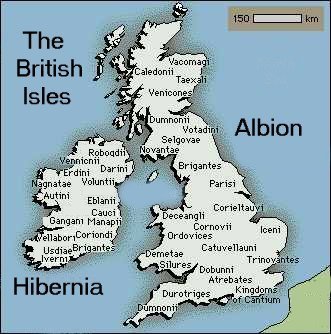
Julius Caesar Raids Ancient Britain.
A Roman Commander's Strange Diversion.
Why did Julius Caesar drop everything in Gaul for an adventure in Ancient Britain?
Julius Caesar
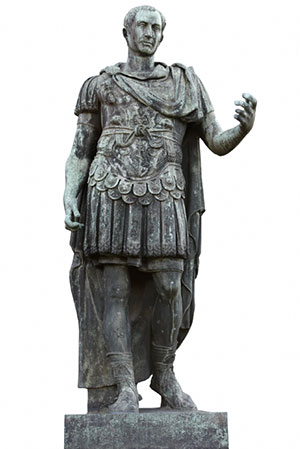
Ancient Britain’s Upstart Cassivellanus and Julius Caesar.
An Event Over Two Thousand Years Old.
When I think about Julius Caesar's attack on Ancient Britain I find it hard to grasp why he made the choice. There are many different reasons told by various historians. This creates further confusion. Some historians had access to accounts written by ancient scholars like the Greek historian Dio Cassius. His record of the event was written two hundred years after Julius Caesar died. The Greek historian, in turn, had access to archives containing Caesar's personnel reports. Many of the names given to Ancient Britons are what Romans decided to call them. Often, they are not the original Celtic names. These Roman scholars are prone to exaggerate in favour of Rome from accounts written by Romans. There is a lot of economic truth. This means much of the history must be speculation. The great Julius Caesar and his visit to Ancient Britain is a story told from many different perspectives. Some modern-day historians say he tried to invade and failed. Others think his visit was a raid. A successful one that achieved a favourable result.
I watched a documentary about the Russian Revolution on TV. Three eminent historians told three different accounts of how Lenin felt and why he gave his speech before a crowd in Petrograd (St Petersburg.) Each historian had different views and reasons. Not all of these learned people could be right. But they could all be wrong. This was in 1917 and there are written records plus film. One hundred years later and these people still don't have a uniform opinion about a historical event. What are the chances for something that happened over two thousand years ago?
What is probable?
1. Julius Caesar did lead an expedition to Ancient Britain.
2. He was fighting the Gallic Wars in Gaul.
3. There was such a person as Cassivellanus. (Latin name. Not his Celtic name)
4. There was such a person as Chieftain Mandubracius of the Trinovante. (Latin name. Not his Celtic name)
5. There was an Atrebates Chieftain called Commius. (Latin name. Not his Celtic name)
I'm kicking off with speculation.
I would like the reader to picture a Roman camp somewhere in Ancient Gaul (today's France.) Inside the camp is Julius Caesar. For some years he has been in the land of the Gauls. He has a large Roman army of many grand legions, but the Gauls are proving to be difficult people to subjugate. There are persistent uprisings around Gaul.
Caesar's tent would be large. There would be certain luxuries and there would be fine Roman furniture. Even a chair for receiving important visitors. He is sitting in such a chair when a group of disgruntled Chieftains from Ancient Britain come before him. Julius Caesar and his Roman guards have grim demeanours. Perhaps it is raining outside of the tent. The atmosphere is a sombre one. The news that the displaced Britons bring is not good for the Roman Commander. He must indulge and get caught up in the politics of these usurped Britons. Why would he do such a thing? The Roman Commander was already in a volatile situation.
During the period of time that I'm writing about, Julius Caesar had been fighting a series of campaigns. He had been in Gaul for three years. These were known as the Gallic Wars and they lasted from 58 to 50 BC. At around 55 BC these wars were far from over. The Gaul Chieftain, Vercingetorix, may have started leading attempts to form a unification of tribes against Caesar’s Roman Army. Though not yet effective, perhaps the knowledge of something simmering was present in Roman minds. Bigger battles are yet to come in Gaul. Then, in the middle of these unresolved and sporadic Gallic wars, why did the Roman Military leader drop everything to invade Britain?
How about this.
1. Was the Gaul Chieftain (Vercingetorix) already trying to unify the Gaul tribes? (A plan in its infancy.)
2. Could Vercingetorix have sent diplomats to Ancient Britain?
3. Were Ancient Britons about to join the unification plan while still in its infancy?
4. Did Caesar invade Britain to thwart such a plan?
The event I do not believe.
Great Julius Caesar tried to invade Ancient Britain and failed. At least that is the way I remember learning it at school. Julius Caesar's ships landed around 55 to 54 BC. As an impressionable child, I had visions of Roman soldiers jumping from the galleys into the sea. I saw them wading through the waves towards the beach. They were about to conquer Ancient Britain. Then a host of brave British warriors painted in blue wode charged onto the shore and drove the Roman soldiers into the sea. The Roman ships returned to Gaul and great Julius Caesar was driven away. I suppose it sounds wonderful and patriotic from my British schoolboy perspective. I doubt the real historical event was anything like that.
Back to some speculation and what was known.
What information did Julius Caesar receive from his sullen British visitors? What lured the Roman Commander away from the struggle in Gaul? Britain was full of feudal Celtic kingdoms. Just like Gaul. The culture of Druid worship was the same as in Gaul. Students from Gaul came to Britain on religious learning programs. The Britons' ways were similar to all the Celtic regions of North West Europe. But the Britons were across a sea. Why bother with them?
I do not know anything about leading many thousands of men against an enemy in a foreign land. I should imagine it would be a very consuming endeavour. Julius Caesar must have had a complex and political reason to take legions away on a quest in Britain. Especially when Gaul was nowhere near defeated.
The group of usurped Ancient Britons were led by a Trinovante Chieftain called Mandubracius. They had been displaced by one all-conquering Chieftain. The fugitives probably convinced the Roman Commander that it was in his best interests to help them reclaim their feudal realms. They may not have supported the Roman Empire, but the situation with the strange all-conquering chieftain in Britain made the Romans a lesser evil.
Mandubracius is a Latin name meaning the black traitor. His Celtic name sounded like Avarwy. Romans often admired their enemy. They worked with and rewarded traitors, but they did not always approve of them. It is possible that Caesar did not have a high opinion of the displaced Ancient Britons that came for his help. But the new all-conquering chieftain in Ancient Britain may have been viewed as a new warlord.
Some historians presume Julius Caesar led a raid on Ancient Britain. As opposed to a failed invasion. An expedition that achieved a primary goal. Julius Caesar may have feared something called a Corion Toutas. This word means a multiple tribal alliance. It was what Caesar was suspicious of in Gaul. Vercingetorix would form a Corion Toutas. Perhaps it may appeal to British tribes? Caesar would be aware how difficult tribal unification could be. Ancient Britain may have achieved the first part of a Corion Toutas of tribes. A unification before Vercingetorix formed one in Gaul. All these Celtic Tribes shared a culture. The Gauls were brethren. Could the new upstart British warlord develop into a difficult warlord? Could the Corion Toutas join the Gauls? Become bigger and confront the Roman Legions? If this was so, then Julius Caesar's interest in raiding Ancient Britain becomes reasonable. A Roman alliance with grateful British Chieftains would rid Caesar of further enemy unification from Britain.
Cassivelanus of Ancient Britain
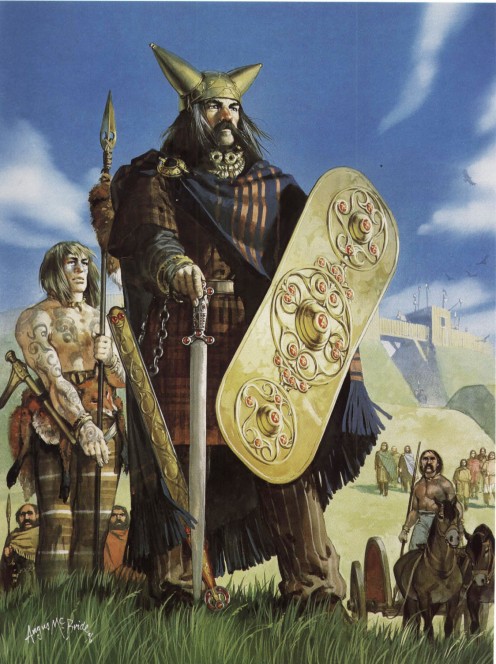
Caesar’s Problem in Ancient Britain.
The all-conquering chieftain in Ancient Britain was portrayed as a power-grabbing and self-styled warrior called Cassivellanus. He had taken control of many British feudal kingdoms. The tribal leaders who did not accept Cassivellanus, as overall supreme chieftain, were driven from power. Perhaps there was more politics to it. Maybe Cassivellanus found some type of platform. There could have been gatherings where he preached about a need to help the Gauls. It would be reasonable that various tribes supported the idea of an alliance. They must have feared and known of the Roman Empire.
Cassivellanus is almost certainly not the Chieftain’s real name. It sounds more Latin and is probably a title. There seems to be an anonymity about him. A lack of personification. The Chieftain is thought to be from the Catuvellauni lands of Britain just north of today’s River Thames.
Caesar needed to do something. First, he tried without committing a Roman army. He sent a diplomatic mission to Britain. Of all the Celtic kingdoms in Gaul, one nation was friendly to Rome. It was the land of the Atrebates. The Chieftain was known as Commius. The land is roughly where today’s Benelux region of Europe is.
The Atrebate, for some reason, allied with the Roman Empire. In support of their Roman alliance, the Atrebate Chieftain went on a mission to Britain with some trading merchants. It would have been diplomatic and to see what the alliance of tribes looked like. He was not received well. As an Atrebate the anti-Roman tribes of Britain would not trust such a man. Commius was taken hostage by Cassivellanus.
Julius Caesar then took a fleet of galleys to Britain. The expedition crossed the Channel and sailed along the coastline. On board, his fleet of ships were two of his legions. The 7th and 10th. The rest of his army remained in Gaul where the series of tribal wars continued. The Romans landed near Deal, in Kent and were reported to have met with resistance. This part of the story becomes vague. Some say that the Romans went back to Gaul. The landing failed. If there was a major battle, why does it not have a name? The Roman archives always note battles. Even ones the Romans lost. If the Romans did return to Gaul, they came back the following year.
Caesar created an encampment. He needed a strong bridgehead. The Roman stronghold remained for some time. It lasted for many months. During this period many of his ships were wrecked in a storm while anchored in a bay. Julius Caesar was also brought the devastating news of his daughter's premature death.
From the coastal encampment, the invaders sent out reconnaissance patrols. Deeper penetration into Britain did not happen immediately. There were skirmishes as Britons engaged some of the investigative Roman excursions. On one occasion a high-ranking Roman officer was killed in an ambush. I get the impression of a palisade fort by the coast. Like the structures in the American Wild West. Except this was a palisade in barbarian Britain. The natives were Britons in blue wode. Savages waiting to ambush the Roman patrols as they marched through the forests.
Finally, Julius Caesar decided to press on with his mission. The Roman Commander assembled and then led his army westward before bending to the north. There were more military engagements along the way. The Romans also took a few British strongholds. Gradually the invaders moved through Britain’s forests pushing the Britons back. Caesar was surprised to see that the enemy used chariots during some of the engagements. After some time, The Romans reached the River Thames. On the other side was the land of the Catuvellauni where the upstart British Chieftain Cassivellanus came from. There were several attacks against the Roman Army again. The Romans held their ground and eventually captured a high ranking enemy Chieftain. His tribe was allied to Cassivellanus.
The Romans had done enough to force Cassivellanus to parley. Many of the other tribes wanted the captured chieftain freed. The tribal alliance was breaking down. Cassivelanus sent an envoy to broker a peace. As these talks continued, Commius the hostage was used to negotiate. Cassivellanus agreed to withdraw his hold over the tribes of the British Chieftains he had displaced. Caesar was able to return control of the feudal kingdoms to the usurped British Chieftains. The British leader adversely referred to as Mandubracius (Black Traitor) got back his Trinovante land and people. Perhaps his people did not want him back? All the desperate Chieftains who had come to Caesar in Gaul were grateful. The Roman Commander had made friends of these men by aiding them. In return, they pledged not aid the Gauls. He also brokered the making of the British Atrebate. A new migrant kingdom in the south. Caesar would have eyes and ears in Britain.
Julius Caesar and his Roman army accepted the pledge of Cassivellanus not to wage war on neighbouring tribes. The upstart Briton had to respect the old Chieftains. This done, the Romans returned across the Channel and back to the campaign in Gaul. The Roman Empire would not return to Ancient Britain for another ninety years.
Why Raid Ancient Britain?
Julius Caesar's dilemma during the Gallic Wars.
Celtic lands of the Isles.