Showing posts with label WWII. Show all posts

Thursday, 6 September 2018

Another Great Douglas Reeman Story - In Danger's Hour. (My Goodreads Review)

In Danger's HourIn Danger's Hour by Douglas Reeman
My rating: 4 of 5 stars

Another very good WWII seafaring story from Douglas Reeman. This story takes place on board a minesweeper called HMS Rob Roy. It starts off in 1943 when the Rob Roy is doing coastal duties around Southern England. The ship has a young 28-year-old Captain Ransome. We are introduced to a number of the ship's crew. They are from diverse backgrounds. Some are likeable, some are loathsome and the young nieve to come of age etc. To be fair this is a usual WWII formate that Douglas Reeman often does. It works! We follow the crew members through their leave and love life. 

Then we go to Italy as the ship goes into action in the Mediterranean. The Axis powers have been driven from North Africa and the HMS Rob Roy is part of an enormous support group for the invasion of Sicily. Some of the action scenes are gripping. From this point on there is the prep work for D-Day 1944 when the Rob Roy returns for this new mission. All in all a good read for any fan of nautical war fiction.


View all my reviews

Thursday, 24 May 2018

The German Submarine Known as U-534


In May 1945, Germany was all but defeated. The caretaker head of state was Admiral Dönitz who presided over the last few days of National Socialist Germany's existence. On the 5th of May, Admiral Karl Dönitz ordered a partial surrender to his forces that still remained in Denmark.
The U-boat crew of a German submarine (U-534) was at sea. Presumably, they had got these orders via their enigma communication. They surfaced and joined with two other U-boats. Together the submarines were forming a convoy. One assumes to return to base. They were in the Kattegat sea - a narrow strip of water between Denmark and Sweden. It was the 5th of May 1945. Two days before the war would officially end on the 7th of May. The subs were about 14 miles Northwards of a small Danish island called Anholt.
The RAF was flying over the sea with impunity by this time of the war. The German Luftwaffe was none existent. Two RAF Liberator aircraft were patrolling the area. They spotted the convoy of submarines. By this time of the war, the allied air forces were attacking anything in enemy territory. Even horse and carts were being strafed. Three German submarines on the surface were plum targets and the RAF Liberators went into the attack with depth charge bombs dropping. The submarines tried to return fire and a fierce naval to air battle ensued.
The crew of U-534 fired upon the attacking British aircraft that were coming at them with machine gun fire and bombs. The u-boat firepower was successful in shooting down one of the RAF Liberators. However, many depth charges were dropped and the surviving Liberator managed to get a direct hit. The explosion caused fatal damage to the U-534 and the craft began to take on water at an alarming rate. The 52 crew had to abandon the sinking vessel. Five of the submarine crew were trapped in the torpedo room as the vessel sank. They escaped through the torpedo tubes. One of the young submariners - Josef Neudorfer held his breath all the way up to the surface and damaged his lungs. He needed to exhale breath before surfacing. The lung damage was fatal and the seventeen-year-old youngster died. Two more of the five men perished from exposure. Therefore forty-nine crew members survived.
Many years later, in 1993, the U-534 was brought to the surface and towed to Birkenhead in Liverpool. Much of the U-boat was repaired and displayed as a museum piece.


Sunday, 24 September 2017

Retro Motor Bikes at Sandringham Country Fair.


Another of the delightful sites at the Sandringham Country Fair was a small selection of vintage motorbikes. I’m not too knowledgeable on motorbikes but I’m clued up enough to know that these are vintage vehicles and are rare in this day and age. Then I saw a little slice of Retro Brit history.


One of the bikes was a desert sandy colour. It also had emblems of the Desert Rat upon the tank. I’m assuming this is a restored dispatch bike from the Eighth Army. This force was nicknamed Desert Rats and fought against Rommel’s Africa Korps during the North African Campaign of WWII. The motorbike was for sale. I'm guessing the price tag was a little more than its original Retro British price of the war years.


Friday, 4 August 2017

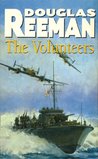
The Volunteers by Douglas Reeman (My Goodreads Review)

The Volunteers

My rating: 4 of 5 stars

In my mind’s eye, I could see this as something like a black and white matinee flick that one might have seen in the fifties. The story takes place from 1943 to 1944 with an epilogue etc in 1945.

Three men decided to put in for a marine service special ops group. They are on MTB and MGB boats doing missions or raids upon enemy occupied territory at various locations. One is a Canadian from the Atlantic convoys who is called Frazer, another is an English bomb disposal man (Allenby) and the final is an east end policeman. (Ives) They are recruited to replace others that have been killed in action.

As the saga develops we are introduced to some excellent characters and two wrens that are love interests to Frazer and Allenby. There are some great action scenes throughout the story as the fast patrol boats confront the enemy. The way the book is written gives a feeling of actually being there in those times of WWII when the people were said to be at their finest.

Great action and lots of wonderful characters – a read that I would recommend to anyone who enjoys Naval stories and WWII based thriller.


View all my reviews

Sunday, 19 April 2015

World War II - German Tiger Tank

Today, my wife and I visited her brother's house. He had a fascinating collection of various World War II tanks from all the various allied armies. But most of all, his fixation was with the German Tiger tank in many different theatres of battle and the various upgrades and designs. These models were in cabinets and other display cases and were very well presented.

I was compelled and mesmerised by the detail of his tanks and some were on a large scale. These finished models must be worth a fortune, but also - I think they would make dynamic museum pieces at a modelling exhibition. I took pictures on my mobile phone of some of his tank constructions. I'm sure most would agree that a lot of time and great effort has been put into making these grand model tanks of various scales. The large Tiger tank (in the first picture next to smaller-scale Tiger tank) is made of plastic. 

However, the pictures at the bottom are another larger scale Tiger tank made of metal. It took over 250 track links for one side. A total of over 500 track links for this beast of a model. It is all constructed of metal and it took nine months to complete. There is some momentous dedication there. It weighs 14 pounds.

Ian's (brother-in-law) knowledge on the subject of Tiger Tanks is very extensive and he seems to know a great deal about the various commanders and individual soldiers that manned these moving iron fortresses. 


Another large scale tank made of plastic
The beast made of metal.


over 400 pins hold all of the tracks together

It took 9 months to build

with internal detail.


Friday, 3 January 2014

Black Baron - German Tank Commander WWII


Michael Wittman was a famous German tank commander of WWII, known as the Black Baron. He earned himself an awesome reputation with his famous ambush of the British 7th Armoured Division in 1944 when the allies began to push east after the D-day invasion.
The SS commander had already won ferocious awe and respect, but his breath taking dare with a single Tiger Tank would echo in eternity. The Black Baron launched an ambush upon an advancing British column on the 13th June 1944 at Villers-Bocage in France.
Inside a single Tiger IV tank, the Black Baron commanded his tank crew to attack and destroy fourteen British tanks and fifteen personnel carriers, also two anti-tank guns.

A YouTube documentary about Commander Michael Wittman.


Tuesday, 22 March 2011

Messerschmitt Me 262


Germany's Messerschmitt Me 262 was the first jet powered aircraft to be used operationally. It was designed before the war, but due to engine development problems, the aircraft was not put into service until beyond mid 1944. By this time the Allies had entered Europe and much of Germany's Luftwaffe was spent as an effective force.

The sudden appearance of this fast jet, however, did catch the allies off guard for a while and the Me 262 was responsible for 509 kills. 

To combat this fast aircraft, the allies used ground attack fighter bombers to destroy them on the ground or taking off and landing. Fortunately for the allies this excellent jet fighter entered the war too late, there was not enough of them and fuel availability all took their toll on the over all effectiveness of the craft.


Monday, 21 March 2011

Gloster Meteor at Australian Air Show


I did a blog about the Australian Air force and Gloster Meteors in the Korean War. I wonder if this is one of the old 77 squadron from that time when the Ozzies used the jet as a ground attack craft. Maybe it was preserved from that 1950s and is now in these great air shows. This was a marvellous plane built by the British towards the end of World War II.

The Australian Air force used them to maximum potential, in Korea, attacking Chinese and North Korean ground forces. However, the first generation jet was outclassed in the air by the more modern Soviet second generation MIGs, during dogfights. Despite this, the Gloster Meteor was able to claim three dogfight kills.

The above footage from an Australian air show is a terrific example of what the jet could do.